
A lot of operators are asking the same question right now: do I need a tachograph for a van over 2.5 tonnes?
That is the right question to start with. Because the real issue with the July 2026 tachograph change is not software first. It is applicability.
Some UK van fleets and mixed fleets will need to take this seriously. Others will not. The problem is that many operators still do not know which group they fall into.
If you run vehicles over 2.5 tonnes and any of them travel outside the UK, this is worth checking properly now. Not every fleet will be affected — but guessing is not a strategy.
If your vans or light commercial vehicles exceed 2.5 tonnes and do international work, the July 2026 tachograph change could affect your fleet. That does not mean every van fleet suddenly needs a new system. It does mean you should check four things now:
- Whether the vehicles are actually in scope
- What tachograph hardware is fitted
- How downloads and records are currently handled
- Who owns compliance for this internally
What is the July 2026 tachograph change?
The short version is simple. From July 2026, some vehicles over 2.5 tonnes doing international work will need the right tachograph setup in place.
That matters because it brings a new category of operator into focus. These are not always traditional haulage businesses. They are often van fleets, mixed fleets, courier operations, service businesses, or growing operators who do some cross-border work but do not think of themselves as running a classic transport compliance setup. That is exactly where confusion starts.
Who is most likely to be affected?
The fleets most likely to need a proper review are the ones where some or all of the following apply:
- Vehicles exceed 2.5 tonnes gross vehicle weight
- Some vehicles travel outside the UK
- International work happens occasionally rather than constantly
- The business does not have a dedicated compliance person
- Current admin is handled through spreadsheets, reminders, or mixed manual processes
- Nobody is fully sure what tachograph hardware is fitted
That does not automatically mean there is a problem. But it does mean this is worth checking properly rather than assuming it is someone else's issue.
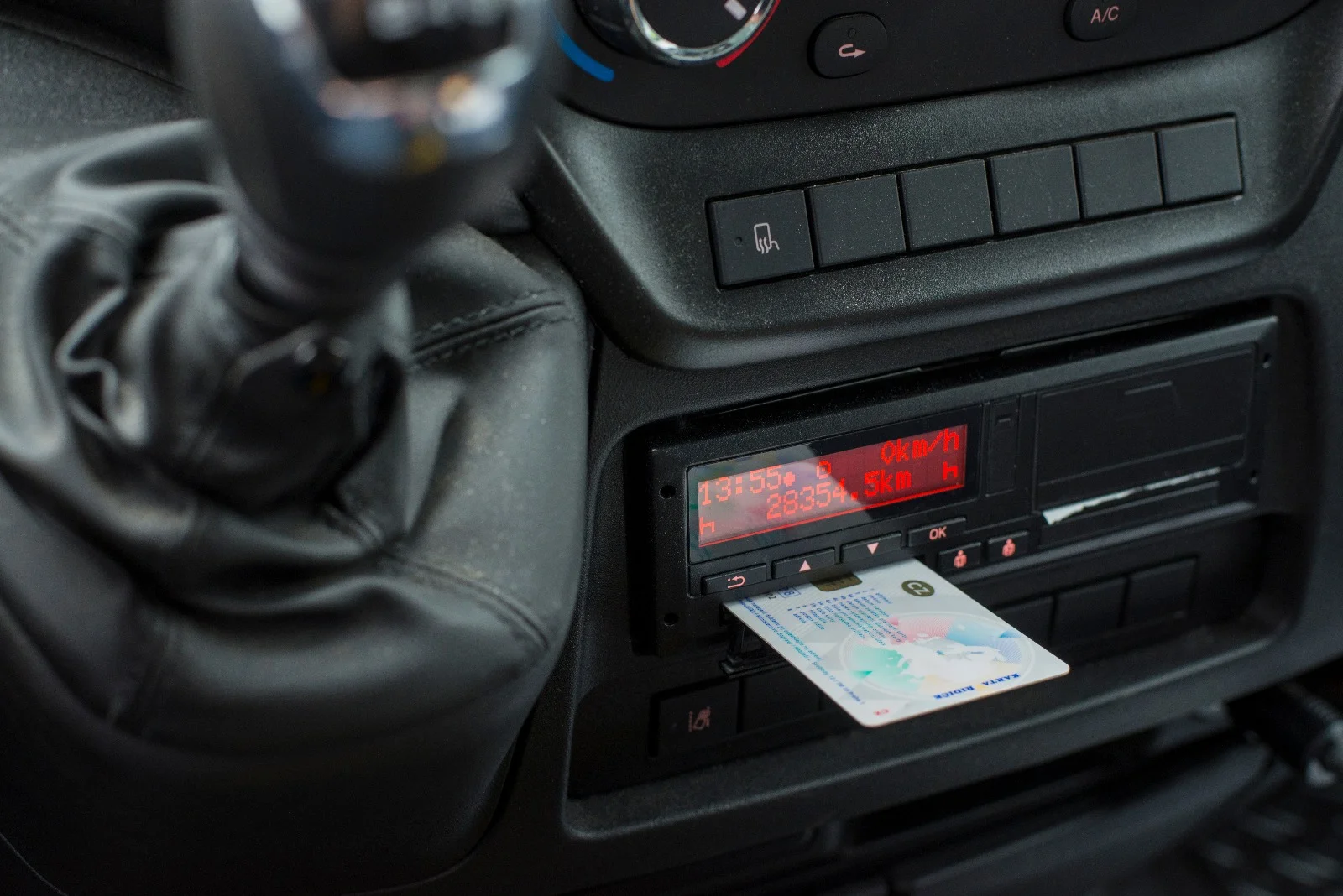
Why this is easy to miss
Most smaller fleets do not get caught out because they do not care. They get caught out because the business is busy and compliance sits across different people.
The owner assumes ops is covering it. Ops assumes admin is on top of it. Admin assumes the service provider has already sorted the technical side. Everyone is acting reasonably — but nobody has a clean, joined-up view. That is why this kind of change creates risk. Not because the rule is impossible to understand, but because partial understanding creates false confidence.
The most common blind spots
"We only go outside the UK occasionally"
Fleets often think occasional international movement somehow keeps them outside the conversation. In reality, occasional work is often exactly why these issues get missed — because the fleet does not think of itself as international-first, the process never gets tightened properly.
"We already have tracking"
Tracking is not the same thing as having the right tachograph setup and process. Plenty of fleets already use telematics or vehicle tracking but still have no clear answer on hardware version, download routine, or who owns the records side. Having some technology in place is not the same as being properly covered.
"We probably already have the right hardware"
Probably is not a compliance answer. If a vehicle may be affected, the hardware needs to be confirmed, not assumed. That is especially true in fleets where vehicles have been added over time, fitted by different parties, or inherited through previous arrangements.
"Someone in the office handles that"
Admin support matters, but if no one clearly owns the outcome, things drift. One person needs to be responsible for knowing: which vehicles may be in scope, what hardware is fitted, how downloads happen, where records are stored, and what happens when something is missing. If that ownership is vague, the system is weaker than it looks.

What operators should check now
The smartest next step is not jumping straight into software. It is doing a proper sense check in the right order.
-
Confirm scope
Which vehicles exceed 2.5 tonnes? Do any travel outside the UK? How often? You cannot make a good decision until that is clear.
-
Confirm hardware
If a vehicle may be affected, confirm what tachograph unit is fitted. Do not rely on assumptions or old notes. Get a proper answer.
-
Confirm process
How will downloads and records actually be handled? Manual? Remote? Documented? Auditable? This is where many smaller fleets realise they have a patchwork rather than a process — and where remote tachograph download becomes a serious operational question.
-
Confirm ownership
Who owns compliance for this internally? Not who helps — who owns it? That one question often tells you how strong the current setup really is.
What happens if you leave it too late?
Late discovery creates bad decisions. If a fleet waits until the issue becomes urgent, one of two things usually happens: they ignore it and hope it is fine, or they rush into the wrong fix without properly defining the problem. Neither is a good plan.
- Extra admin burden with no system to support it
- Confused responsibility between owner, ops, and admin
- Wasted spend on the wrong solution bought under pressure
- Messy last-minute retrofitting and poor records
- Audit exposure that a clean setup would have prevented
Why this matters for tachograph compliance for small fleets
Large operators usually have clearer compliance structures, dedicated people, and established processes. Small fleets often do not. That is why tachograph compliance for small fleets is rarely just about the rule itself — it is about whether the business has enough visibility and ownership to manage the rule properly.
If your current setup depends on memory, spreadsheets, or one person keeping it all in their head, this is exactly the kind of change that exposes the cracks.
Not Sure If Your Fleet Is in Scope?
Take the 2-minute fleet check to see whether you may be affected, what needs confirming, and where your current setup could leave gaps.
Start the Fleet CheckFinal word
The July 2026 change will not affect every van fleet. But it will affect some. And the fleets most likely to struggle are the ones sitting in the middle — not clearly exempt, not clearly prepared, and still relying on assumptions.
If that sounds even vaguely familiar, check now. Early clarity is cheaper than late correction.
Frequently Asked Questions
Some vans under 3.5 tonnes but over 2.5 tonnes doing international work may fall into scope under the July 2026 tachograph change. The key point is not van versus HGV — it is vehicle weight, route type, and actual use.
Purely domestic UK fleets are not the same risk profile as fleets doing international work. That is why operators need to review actual vehicle use before assuming they are or are not affected.
Not automatically. Telematics or tracking does not by itself confirm that the right tachograph hardware, download process, and compliance ownership are in place. These are separate requirements.
Start with scope. Confirm which vehicles exceed 2.5 tonnes, whether they travel outside the UK, what hardware is fitted, and who owns compliance internally. See our Remote Tachograph Download page for the next step.
Not every small fleet will need the same setup, but if affected vehicles are in scope, remote tachograph download can become an important part of keeping records consistent and reducing manual admin risk.