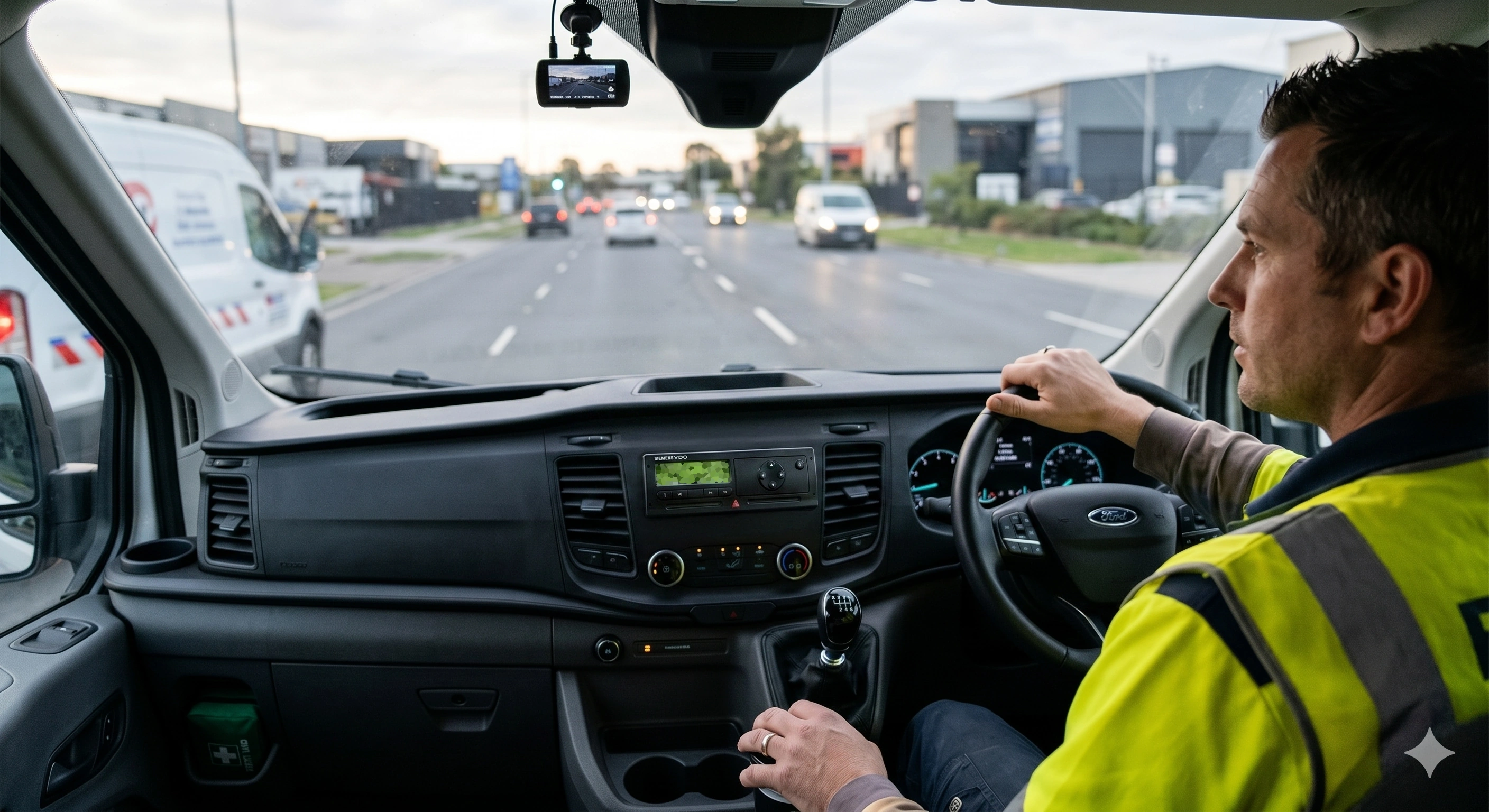
If your fleet may be affected by the July 2026 tachograph change, one question shows up fast after scope and hardware.
How are we actually going to manage the downloads and records side of this properly?
That is where remote tachograph download starts becoming relevant. A lot of small fleets still rely on manual downloads, spreadsheets, reminders, and somebody in the office trying to keep the whole thing together. That can work for a while. But once the fleet grows, vehicles move more often, or compliance gets more complex, the cracks start showing.
This article explains what remote tachograph download is, how it works, and why it matters for small fleets trying to stay ahead of compliance pressure before July 2026.
Tachograph compliance problems in small fleets rarely come from dramatic failures. They usually come from missed routines — a download gets delayed, a card is overlooked, someone assumes somebody else handled it. Remote download helps turn that memory-based process into something more controlled.
What is remote tachograph download?
Remote tachograph download is a way of pulling tachograph and driver card data without relying entirely on manual physical downloads.
In plain terms: it helps operators collect the data they need more consistently and with less chasing. Instead of waiting for a vehicle to come back, finding the right person, remembering the schedule, and manually pulling files — the system supports a more reliable process for getting records in place.
That matters because compliance problems in small fleets rarely come from dramatic failures. They usually come from missed routines.
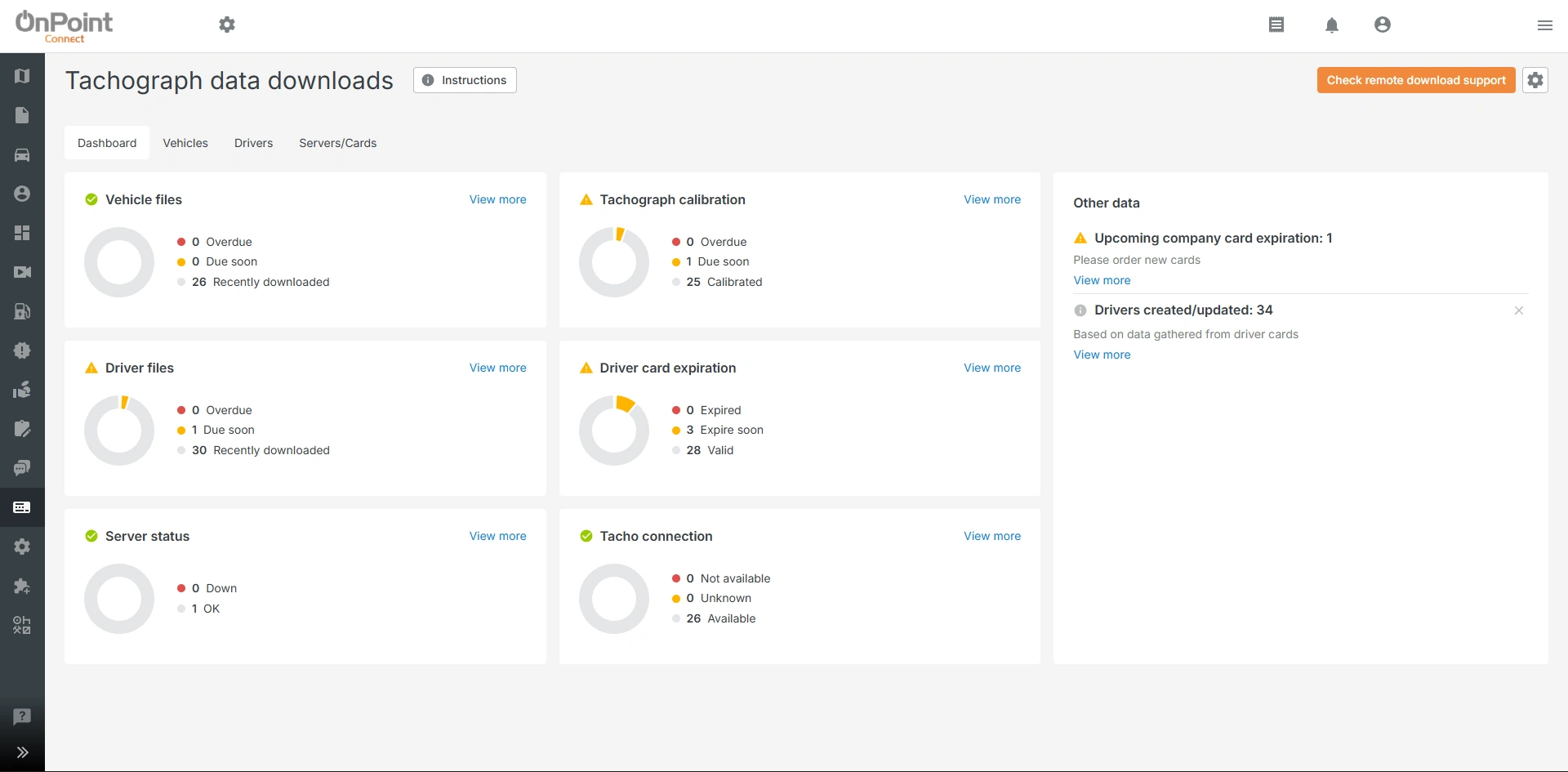
How does remote tachograph download work?
The exact setup depends on the vehicle, hardware, and system in use — but the general principle is straightforward.
A compliant setup makes it easier to collect vehicle and driver data without relying on the same level of manual intervention every time. For small fleets, the practical benefit is not just convenience. It is consistency.
Instead of building the whole process around memory and depot timing, remote download supports a routine that is easier to manage and easier to evidence. That becomes more important when:
- Vehicles are moving regularly and not always returning to depot
- Drivers work across multiple sites or routes
- One person is juggling multiple admin responsibilities
- The fleet is growing faster than the process around it
Why manual download processes break down
Manual processes are not automatically bad. But they are fragile.
A small fleet can get away with manual admin for longer than a large operator because the volume is lower. The problem is that the process often lives in people's heads rather than in a system. That usually looks like this:
Somebody remembers when downloads are due. Files are saved in different folders. Follow-up depends on one admin person. Nobody checks for gaps until there is a reason to. The process works — because a few good people keep it alive. That is not a stable compliance structure. That is survival by memory.
And it is exactly the kind of thing that starts wobbling when regulatory scope increases or that one reliable person is unavailable.

Why this matters for the July 2026 tachograph change
Not every small fleet needs the same answer. But if your vehicles may be in scope, the July 2026 change forces a practical question:
Do we actually have a download and record process that is strong enough?
For some fleets, the answer will be yes. For others, it will be obvious that the current setup is too dependent on manual admin, unclear ownership, or assumptions about what is already covered.
That is why remote tachograph download matters here — not because it sounds modern, but because it can reduce the risk of missed routines, patchy record collection, and last-minute chasing.
Tachograph compliance for small fleets is mostly an execution problem
Small fleets usually do not fail because they do not know the rules exist. They fail because paperwork loses to firefighting.
- A vehicle issue turns up and takes all attention
- A customer changes something last-minute
- A driver is off and routes need to be covered
- The office is stretched and compliance slips down the list
- The download task gets pushed back — and then forgotten
That is why tachograph compliance for small fleets is mostly about whether the routine survives a messy week. If the process depends on perfect memory and perfect timing, it is already weaker than it looks.
Remote download helps because it removes some of the reliance on manual discipline. It does not replace good ownership or process — but it does support both.
What small fleets should check before choosing a system
Before buying anything, get clear on these questions first.
-
Are your vehicles actually in scope?
Do not buy around a guessed problem. Start by confirming whether the affected vehicles exceed 2.5 tonnes and do international work.
-
What hardware is already fitted?
A lot of confusion starts here. Confirm the actual setup before making any decisions. Do not rely on assumptions or purchase records.
-
How are downloads handled now?
Map the current process honestly. Who does it? When? Where are files stored? How are gaps spotted? What happens when something is missed?
-
Who owns the outcome?
If everyone is involved but no one owns it, the process will drift. One person needs to be accountable for the result — not just the task.
-
What pressure is the current setup already under?
If the admin side already feels stretched, adding more scope without changing the process is asking for trouble.
Signs your fleet may need a stronger download process
These are the usual warning signs that manual handling is becoming a compliance risk:
- Downloads depend on one person remembering to do them
- Vehicles are not always returning in a predictable pattern
- Files live across emails, desktops, and shared folders
- No one checks regularly for missing data
- Compliance responsibility is split across ops, admin, and the owner
- The business is unsure what hardware is fitted in affected vehicles
If that sounds familiar, the issue is probably not effort. It is structure.
What a good process should achieve
Whether the fleet uses a simple setup or a more advanced one, the goal is the same. A good process should make it easier to:
- Collect the right data on time, consistently
- Spot missing records early — before they become audit problems
- Reduce avoidable manual chasing and follow-up
- Keep records in a form that is easy to review and evidence
- Support the person internally who owns compliance
That is the real value of a strong remote download setup. Not a fancy dashboard. Not feature bingo. Just fewer gaps and less admin stress.
Remote Tachograph Download from OnPoint Connect
Automated data collection, audit-ready records, and full fleet visibility — installed in days. See how it works for small UK fleets.
See the Solution Check Your Fleet RiskFinal word
If your fleet may be affected by the July 2026 tachograph change, remote tachograph download is worth looking at for one simple reason.
It helps turn compliance from a memory-based task into a more controlled process. That matters a lot for small fleets, where the gap between "we do have a process" and "we think someone handles it" is often smaller than it should be.
The first step is still scope. Then hardware. Then process. Then system. But once you get to the process question, remote download becomes a serious operational conversation — not just a technical add-on.
Frequently Asked Questions
Remote tachograph download is a way of collecting tachograph and driver card data more consistently without relying entirely on manual physical downloads every time a vehicle returns to depot.
It helps small fleets reduce missed routines, improve consistency, and make record handling less dependent on memory or one person keeping everything together. See OnPoint's remote download solution for details.
Not necessarily. But fleets with affected vehicles, stretched admin processes, or unclear download routines should review whether manual handling is still strong enough for the post-July 2026 environment.
No. Scope comes first, then hardware, then process. Remote download becomes relevant once the fleet understands what it actually needs to manage. Read our guide on whether your vans are in scope.
Yes, especially where the change exposes weak manual processes or creates more pressure around keeping records complete and organised under tighter requirements.